Why is it so hard to transfer knowledge into action?
You are not alone if you find yourself wishing that you could just put your weary head on a book and have all that knowledge magically transfer right into your brain. Even if you could download the book’s content directly into your brain, it wouldn’t bring about the changes you wish would come easy.
Reading books, listening to podcasts and attending workshops are Step 1 in our human learning process. We are taking in the concepts. This is called didactic learning.
If you are keenly interested in the subject matter, you probably have a good retention rate when it comes to soaking up all this new knowledge. But if you could care less, didactic learning will feel more like a lecture.
How often does this happen in real life when we try to impart life lessons to our kids? We are so puzzled as to why our familiar lectures never evoke a change in our child’s behavior.
That transference of knowledge into useful information that we routinely apply is Step 2. It is called procedural learning — and it is only acquired through practice.
This happens organically, with little resistance from us, when we are learning to play an instrument, a new sport or ride a bike. We take in the knowledge, we often get a live demonstration and then we put in some effort in the form of practice.
Again, we can see how easily this procedural learning occurs when we work with our kids to teach them how to tie their shoes, bake some cookies, and ride that bike without training wheels.
Our parental lectures rarely are as effective as live demonstrations and frequent practice.
Now that I have offered you a very relatable framework for didactic learning and procedural learning, I want you to work with me. It is easier to see now why we adults get stuck when it comes to all this personal growth change — we know we would greatly benefit from change, but we just can’t get ourselves to do it.
Our mindset might be just like that of an 8 year old boy, who knows that pouring milk into the cereal bowl till it is overflowing only makes a mess in the long run, but the daily habit of watching it explode like a volcano is hard to resist.
Dr. Ritchie Davidson calls this the declarative procedural gap. We know better, but we haven’t put the knowledge into practice.
We all know people who are book smart, but never really apply what they’ve learned. This is because they took in all the knowledge, but didn’t take steps to apply in through regular practice.
All these skills and tools we are reading about to help us in parenting and relationships sound amazing – but if we aren’t giving them a try in real time, we are not going to experience any noticeable improvements. We can lecture our kids on self-control, emotional regulation and good sleep hygiene, but without some parental role modeling and their own daily practice, nothing will change.
We all need some help — a bridge over the declarative procedural gap. On the one side, we know a change would do us good – and on the other side is how that change becomes part of our daily routine. We can gaze across the gap and see our future selves. But getting there is the hard part. Or so we think.
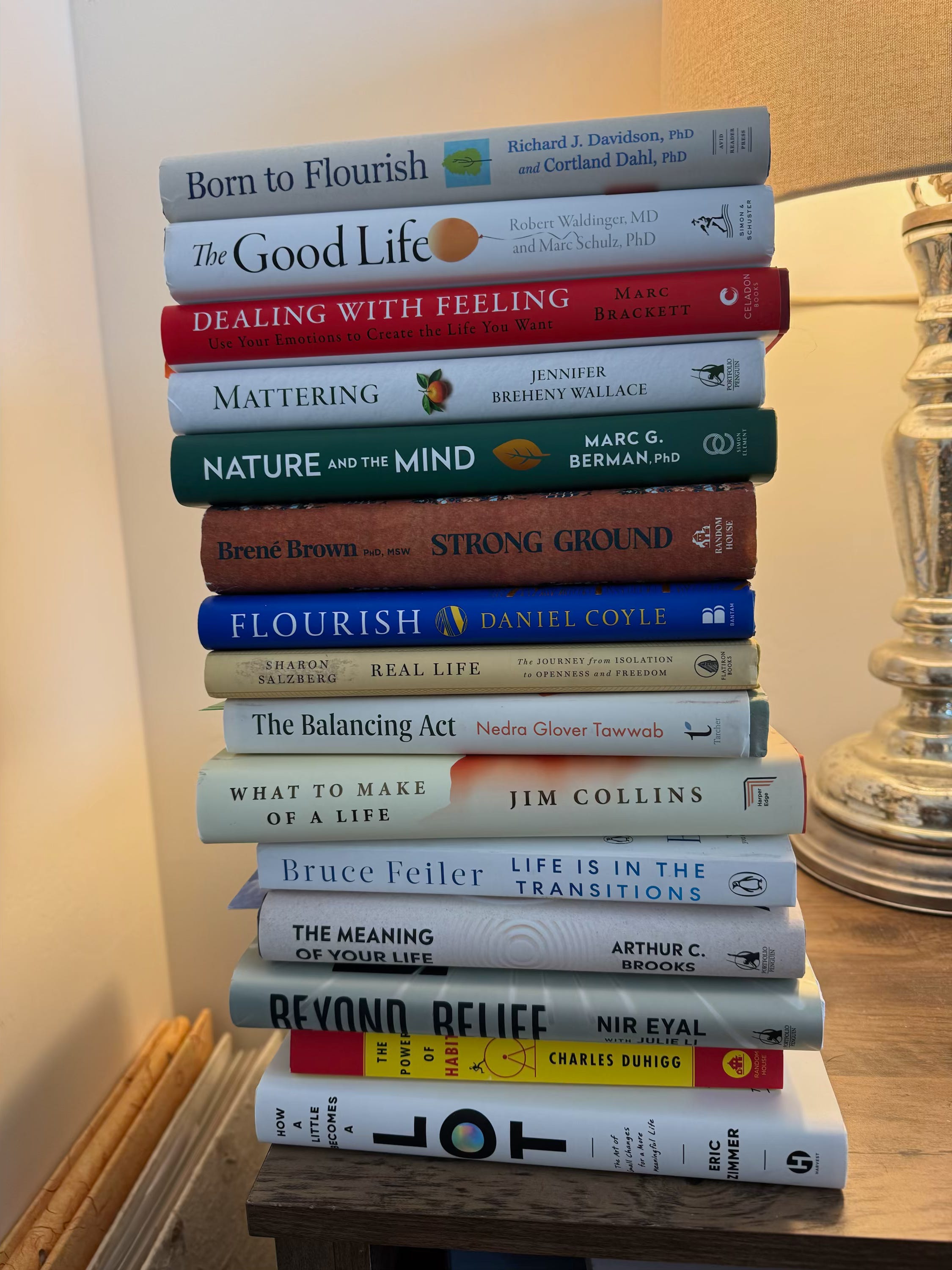
In his book, Born to Flourish, Dr. Ritchie Davidson dispels the myth that making some beneficial changes in our lives will be incredibly hard, take too much time and effort. We think that closing that gap between what we know – and actually putting better skills and tools into practice — is a bridge too far. Dr. Ritchie would tell us to take a small leap of faith.
First, he wants you to know how your brain actually works. Once you grasp these concepts, you will find it much more appealing to put in the practice.
Did you learn how the gears and brakes work on your bike? Didn’t that help you gain some confidence and shift you into understanding how you and your bike would work in tandem to go places? This is the same conceptual knowledge that will shift you into relating to your brain – and what is possible when you practice new skills and tools.
Dr. Ritchie Davidson reminds us that we know eating healthier and exercising regularly is beneficial for our bodies. We also know how good we feel when we do both. We won’t be perfect with either, but we will certainly grow more consistent with improved healthy eating and feeling physically stronger over time. We are building, maintaining and getting back on track with healthy eating and consistent physical exercise. We’ve incorporated better habits with regular practice and increased awareness.
When it comes to our mental, emotional and relational life, we can easily apply the same basic framework. We simply need to grasp the concepts of how our incredible brain systems work to bridge the gap. And we need to do more than become knowledgeable about psychology and neuroscience. We need to put that information into practice.
Procedural learning is acquired through practice. It is procedural learning that enables us to establish a habit because it is governed by brain systems that are totally different from those that govern “declarative learning.” (excerpted from Born to Flourish about two kinds of learning)
You will not find a more enthusiastic and encouraging resource for bridging the declarative procedural gap than Dr. Ritchie Davidson. His groundbreaking research reveals that you can in fact teach an old dog new tricks — and it is easier than we think.
Ok — I used the old dog metaphor to mean us!
Our brains are more malleable than we realize. Our neuroplastiticy is designed to help us create beneficial new neural networks rather quickly. And once we know this, we won’t forget it – we will work with it!
Knowing that our brains are designed to work systematically to help us take in new information and engage with it, so that our lives get better — and that we become more resilient, agile and well-practiced with skills and tools – we will be motivated to close the gap. We will be racing across the bridge.
It is actually a rather small gap between knowing change would benefit us – and putting those changes into daily practice.
Dr. Ritchie and his team have the living proof that it only takes a few minutes a day of guided or unguided meditation, reflective writing or short contemplation to rewire our brains to flourish.
This dovetails right into the self-knowledge imperative that Jim Collins is urging us to take seriously. It is now crystal clear that we have made our lives much harder than they had to be because we refused to close the gap.
We know a change would do us good.
We are currently being flooded with lots of game-changing breakthroughs in psychology, neuroscience, emotional integration and much improved parenting models. It is not lack of knowledge and insights. The tools are right there – available to all of us.
The clarion call is to begin to use the tools and skills. Put in the practice; close the gap.
You didn’t learn to ride a bike by reading a manual and staring at it each day.
You won’t benefit from all these incredible relationship and life changes, a strong healthy brain that is agile, resilient and resourceful by reading more books and plugging your earbuds in for another podcast.
You have to put in the practice. Every Single Day.
Esther Perel posted this wisdom this morning: Pick one small moment today where you would normally go on autopilot and interrupt it deliberately.
That is an invitation to build stronger neural networks by practicing awareness, new skills and closing the gap between knowing a change would do you good and putting it to work FOR you.