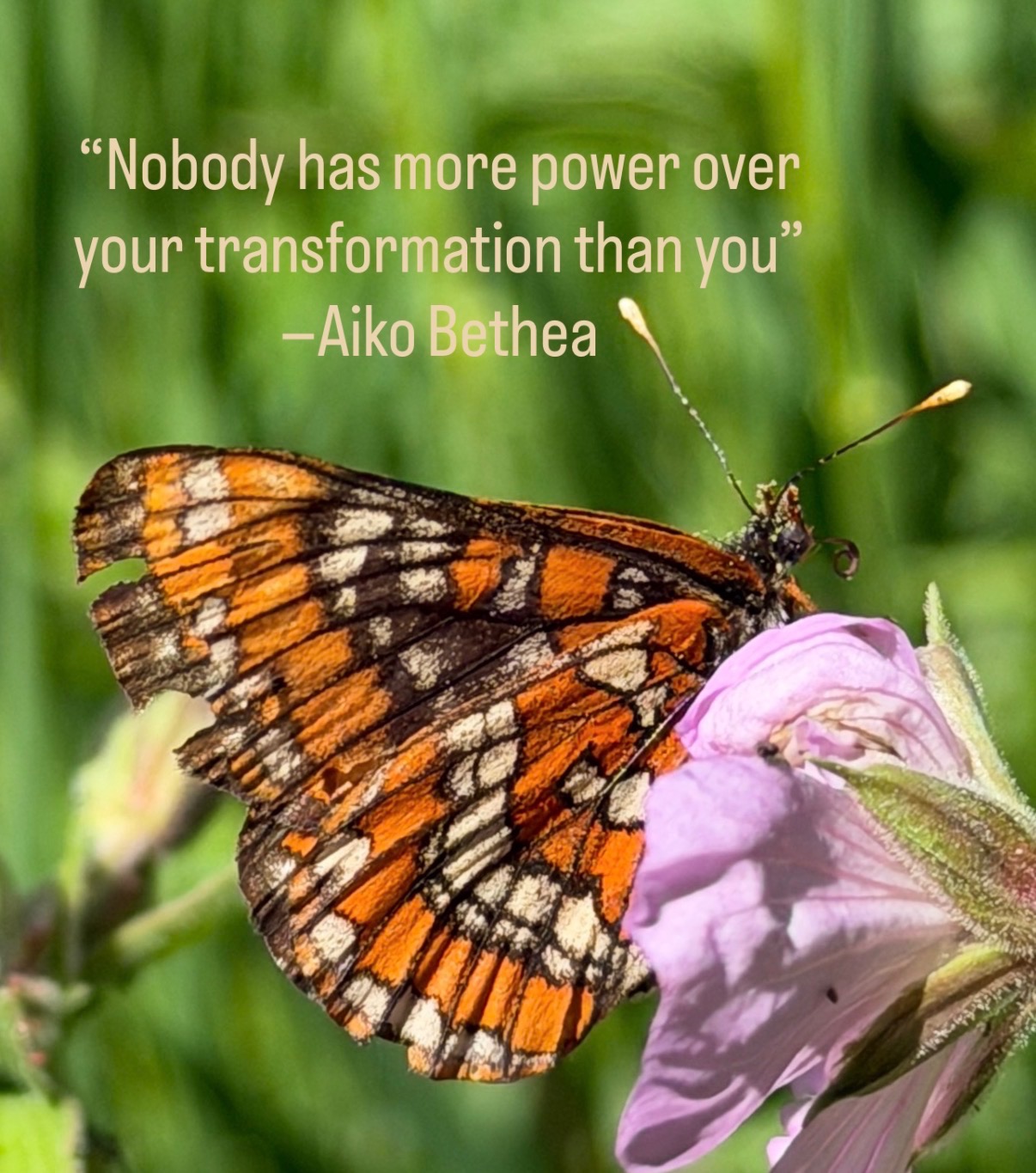
To gain invaluable self-knowledge, look honestly at your intentions and your impact
Most people probably cringe when they hear the word “accountability” but it is nothing more than being completely honest with ourselves. It is the hard look in the mirror and owning the fact that we do have room for improvement.
Aiko Bethea reframes and redefines accountability as a prerequisite for learning – mostly about ourselves through a very clear lens and with an honest assessment in her latest book, Anchored, Aligned, Accountable.
Jim Collins makes the proclamation that self-knowledge is foundational and is now an imperative in his latest book, What to Make of a Life. Jim’s wisdom comes from deep research over more than 10 years into the lives of ordinary people who faced a lot of cliffs and fogs in their lives – and kept going and growing through the process. These people show us what is possible in our lives when we face our truths and take advantage of the fact that as long as we are breathing, we are works-in-constant process.
Jim Collins says self-knowledge is an imperative in today’s culture of rapid change, constant uncertainties and advancing technology.
Aiko backs that up and amplifies that accountability can fast-track our awareness of where we have the most room to grow. But instead of being scared to look at the places where you can work toward improvement – own it. Be courageous enough to face your own truth. Where are your intentions and your impact in conflict?
One of the things I love about Aiko’s new book is that she incorporates these self-reflective practices into each section. She maps things out, shares some relatable real life situations, and then she says “your turn”.
Jim Collins tells us self-knowledge is imperative – and Aiko delivers the meaty self-reflection practices that feel like kettle bells. These questions help you see a cross-section of your daily life and get crystal clear: Could I be doing better – and how?
The day you make that bold move to look directly into a very clean and clear mirror is the day you stop kicking the can down the road.
As you are brushing your teeth and looking in that bathroom mirror, what is the one thing that you are dreading today? What are you bracing for? What story are you telling yourself? What are you putting off? Who do you hope to avoid?
Aiko urges us to flip the script on any of these scenarios and ask ourselves a very direct question. What is our role in any of those common scenarios?
If you’ve always been the people pleaser, it’s quite possible that your habitual response is the real cause for the effect you dread. You know you feel resentful, but you pick up the slack anyway or bite your tongue. So nothing changes – and day in and day out, you get the same result.
If you let others define you, or their opinions matter so much that you struggle with self-doubt and insecurity, that’s on you. You probably have a long track record that is the living proof that you do good work, are very dependable and often get the job done. Why do you give away your power and acquiesce to others? Is it out of habit?
If we are being honest with ourselves, we don’t spend much time during the course of an ordinary day really reflecting on how we are showing up in life. Wherever we find frustration, disappointment and that nagging sense of dreading (an interaction, a daily dust-up, an ongoing problem), is a good place to start that practice. Ask yourself – what could I be doing better in these very familiar situations?
In my mid-30’s, I would often put off til tomorrow what I should have done today. I procrastinated- on folding laundry, prepping meals, getting gas in my car on the way home from work. Then I would find myself constantly playing catch up and feeling overwhelmed by the basic necessities of life. Putting off til tomorrow was no longer working. I hated being so behind in life. I faced the facts and made some much needed changes. I was not an overnight success to be sure. But I stuck with the small efforts it took to shift how I was handling basic life necessities. I confess that when I hopped in my car after corralling all the kids for school, with healthy lunches and each of us in clean clothes – and I saw I had 3/4 of a tank of gas, I gave myself an “atta girl” for the forward progress.
I am a huge fan of James Clear’s practical advice for building Atomic Habits and I believe his framework of starting small and building consistency over time pairs well with Aiko Bethea’s practice of self-reflection on what we could be doing better. After all, if we look in that mirror and have that honest assessment of where we have room to improve, we could easily shut ourselves down. Start small and accumulate a few wins.
We learn the most about ourselves in our relationships. Consider asking yourself what you might do better in your relationship with your spouse, your kids, your siblings or a friend. One of the easiest places to look for a chance to do better is discovering where you get defensive. When your partner gets frustrated yet again because you forgot to pay that bill or didn’t put gas in the car – can you just own it instead of fighting back?
Aiko would tell you that owning our shortcomings, mistakes or bad habits is a giant step in the right direction. Break the pattern of being defensive by owning your impact.
Sure, you had good intentions to pay the bill a week ago, but you just kept putting it off and the due date slipped right by you. And yes, you did know that this morning would be crunch-time, but on the way home from work last night you didn’t feel like making one more stop to fill the tank. Owning this small stuff really puts things in perspective. Those tiny investments in doing the right thing in time really pay big dividends.
You can begin to see the correlation between your good intentions and your impact. They are linked. Good intentions only get you so far. Recognizing the positive or negative impact becomes the wake up call and activation mechanism for changed behaviors.
Instead of passing the gas station on the way home from work, you’ll remember both your good intention to do better the next time and the positive impact you want to have You’ll find the motivation to make a better decision this time. Even though you are tired and hungry, you can spare 10 minutes to have a positive impact tomorrow morning.
You may think it is silly to begin your self-reflection process with small mundane changes – but this is how you cultivate greater self-awareness and build your confidence in your ability to shift and change. You are retraining your brain and strengthening muscle memory. As you build confidence in your ability to see where your intentions and your impact often clash and create some conflict – you’ll be motivated to tackle the harder parts of self improvement.
It is very possible that if you start to reduce the number of times you stop getting defensive, angry or overwhelmed – the next level of personal development just might be a whole lot more accessible to you. Remember that accountability is a prerequisite for learning. Might you learn that you are responsible for the frequent negative impacts you wish would go away? That’s the question you ask your mirror?
Noteworthy Resources:


https://www.artofaccomplishment.com