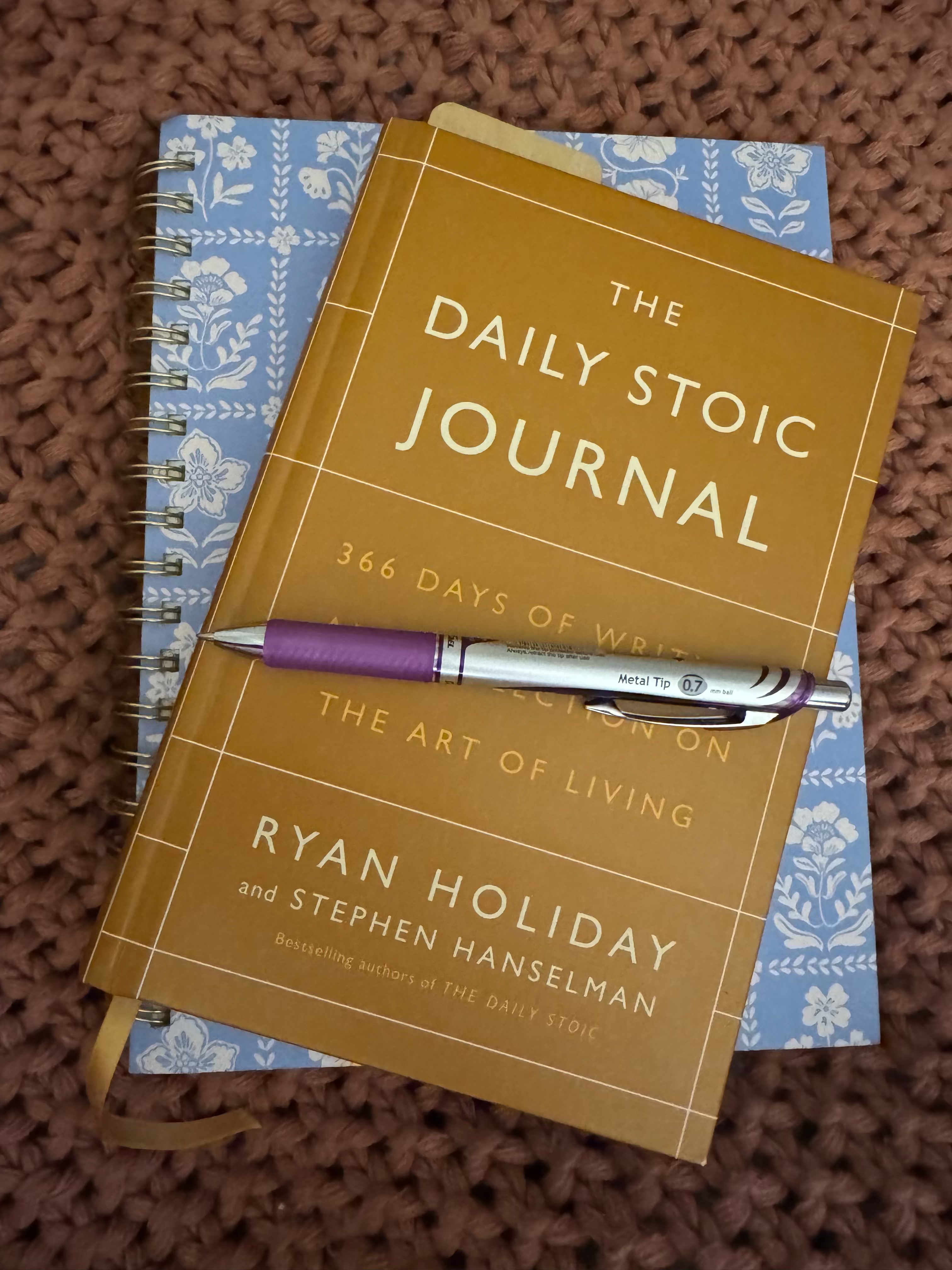
Whenever I need to work something out, I write it out.
I grab my journal and favorite purple-inked gel pen and pour out everything I can access about how I am thinking and feeling. It is a brain dump – and more. It is also a heart outpouring.
What is on my heart and mind – and how is it all intersecting?
What is old and what is new? What feels familiar because I have experienced it before? What is new about this situation in comparison to my priors? It is right here — where I pause to reflect on variables — that I often make great discoveries.
First and foremost, I remind myself that a key new development is my own personal growth. I am not the same person I was back then, in those old prior experiences. I have put in more work, have much more practice under my belt and have most definitely picked up new skills and tools along the way. I know I have much more to “work with”.
Then I do a little check-in and ask myself if I was “under the line” when I was experiencing an interaction or situation. For me, “under the line” is my litmus test for whether I was in alignment with my values. While I might be able to hold my tongue, remain outwardly calm and meet the moment with more grace when things are heated and dicey — it is my thoughts I am most concerned about during this “tune up”.
My self-awareness barometer can easily detect when I am getting lop-sided in how I view a situation. It is human nature to have some wishful thinking, hoping that another person might change or meet these familiar moments with a little growth of their own. My thoughts and my negativity bias can run a bumpy course in times like this. Left unchecked, I will miss my part in a relationship dynamic.
I start writing, exploring and looking for clues. I am working things out by getting pretty gritty in the self-discovery process.
Rick Rubin, author of the Creative Act, once shared with Dr. Andrew Huberman in a podcast conversation about his book, that when we journal, we need to be as raw and honest as possible. We will not learn anything about ourselves if we sugar coat what happened or skip over some of the most salient parts.
I scribble across the blank page “true confessions”. A knowing smile comes across my face as I face my truth through a cleaner lens. It is in this journaling exercise that I discover that even though I know what I could do to meet these moments to effect real change, I often chicken out.
I get curious. Again, I am looking for variables. Did I assess that in this moment, it was not the right time to have a hard conversation; was I under resourced and not at my best to use sophisticated tools and skills; was this conversation better tabled for a time when we weren’t in earshot of others?
This deeper work is so invaluable to me. If I didn’t go there, I would likely end up chiding myself for “knowing what to do but chickening out, yet again.” By writing it out and working it out – I can see my self-awareness is much improved. That is work in progress that moves me in the right direction. I remind myself that personal growth and self discovery happens in baby steps.
I can acknowledge that “knowing that skills and tools are better than protective armor” is a giant step in breaking habitual behavioral patterns. And I can also give myself extra credit for discernment. If I wasn’t meeting the moment externally in a much better way, I was internally seeing it —and experiencing it — with greater self awareness AND other-awareness.
I like to take some time to think about what was going on for someone else. This is where the teachings of Dr. Ellen Langer really pay off for me. She tells us that what people do makes sense to them. Get curious about the stories they are telling themselves.
Sometimes I realize that other people were on overload. What happened was more a reaction than an intended, grounded response. I can almost chart the ups and downs of any given day with a given person based on their body budget. When someone starts running out of steam, they lose their balance and the wheels come flying off. Maybe the best course of action is a snack, a nap or a romp in nature.
I could have made a mountain out of a molehill by overreacting to someone else’s dis-regulation when what they really needed was to refuel. I could have spent a lot of my time and energy trying to have a deep, hard and meaningful conversation when they just don’t have the capacity to go there.
Before I get a little too cocky about how good I am at variables, discernment and having a strong immune system when it comes to emotional contagion, I give myself a reality check and a challenge. Where do we go from here?
I remember Rick Rubin’s advice about honesty. I know if a new day dawns, and I don’t circle back, I am lacking the courage to test my mettle with skills and tools that can bring about transformational change. Armed with knowledge about when someone is most likely to be receptive to listening, learning and willing to get some feedback, I can make a plan of action. I write this down as an affirmation and a pledge: “I can do hard things.”
I also remind myself that I am not solving for my discomfort. If I open any “circle back discussion” with attempts to make my life easier, I am missing the boat and my own personal growth lesson.
One of the best questions we ask another is “What does help look like for you?”
When I solve for my discomfort, I miss the opportunity to teach the importance of self-reflection and self-discovery to someone else. If they can’t see that what they are doing isn’t really working for them, they have won’t have much motivation or interest in seeking change.
This is the hardest part of my own personal growth work – and I can laugh about it now. I spent most of my life people pleasing, rescuing and fixing. I stunted my own growth and spent a lot of time and energy on people who had no interest in mining for their own.
If I didn’t write it all out, I probably wouldn’t work it all out to make this powerful and transformational discovery. These days, I take the time to do the long math, on paper and with candor. What do I value in the long run and what am I learning about myself that shifts me into deeply rooted change?



One response to “Harnessing Self-Discovery Through Journaling”
Love reading this this morning
Four o’clock and time to write and reflect ..in the guest house quiet and peaceful trying to stay in my moment ..this was perfect for me today ..I will look for a pen and paper ..I have be egg n journalling for 25 years and this trip I left my journal home … you have me on the search for paper ….merci beaucoup